Evaluate and Elevate: A No-Fluff Branding Guide
Here's the truth: good branding goes way beyond aesthetics. In today’s increasingly competitive market, your brand identity is your first handshake, your lasting impression, and your best recruiter. And the good news? You don’t need to have it all figured out since the very beginning. But you do need the essentials in place. Here’s how to get there.
Building a powerful brand typically involves three pillars of startup marketing:
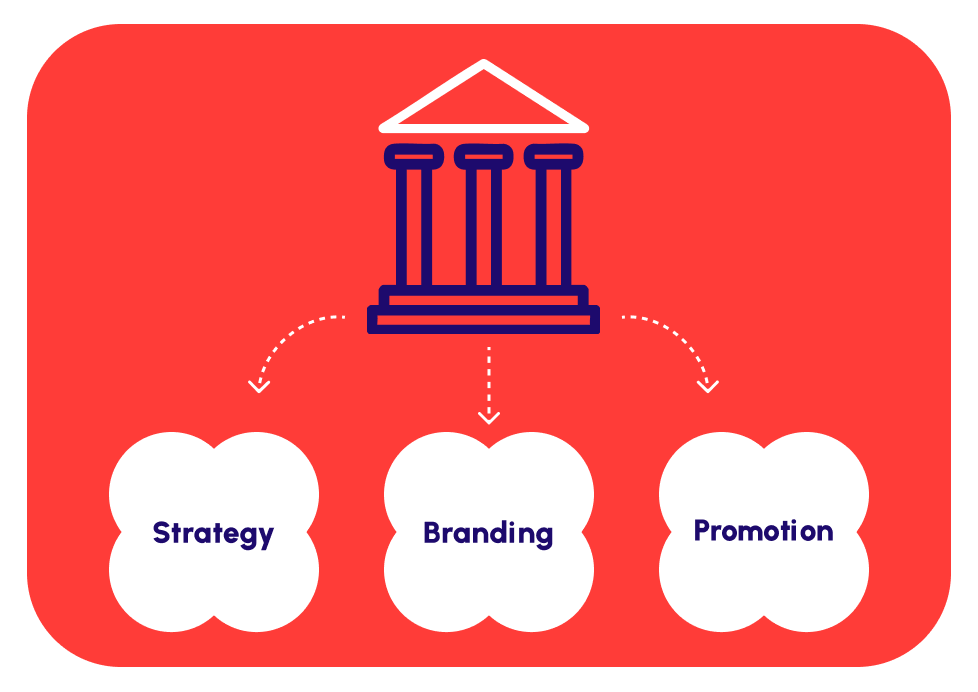
Strategy: Your purpose, values, and positioning in the current market. That’s your foundation. A carefully crafted and executed strategy aligns your company’s vision with your customers’ expectations and experiences.
Branding: The identity is essential to your strategy, as it should encompass important elements, like its name, history, personality, and both visual and verbal expression. Do not confuse this with brand image, which comes from the audience.
Promotion: Speaking of the audience, marketing is how you communicate and deliver on your brand promises. Your goal here should be to build a lasting relationship with customers by fostering brand awareness, trust, and loyalty, which ultimately increases the brand's value - and shapes its image.
What is brand identity?
Brand identity, or branding for short, is the visible and verbal expression of your brand strategy. It typically includes your logo, colors, tone of voice, messaging, website design, and how your brand behaves across the end-to-end customer experience.
Many young companies think branding boils down to:
Just a logo
A color palette or mood board
A templated tone of voice
In reality, you should think of branding as a tool that allows your company to connect on a deeper level AND a framework which helps it grow based on the key strengths of the products or services you’re providing.
Establishing your brand identity means determining your company’s purpose and goals. The ‘Why’ behind everything you do. The determining factors:
Your market position: Identify your unique value proposition, then analyze your competitors and how your company is different from them. Initially, this can be as simple as searching online or browsing business directories. Eventually, you’ll want to start analyzing customer perceptions through direct communication and go deeper into understanding your competitive landscape.
Brand values and brand vision: Good branding requires a strong set of values and a clear vision. These act as a guiding principle for all business decisions, from product development to marketing, thus fostering an emotional connection with the audience and increased brand loyalty.
Brand early, brand smart
A solid brand identity is what makes your company more recognizable, forms emotional connection with your customers, helps attract better talent, and improves your financial performance and attracts investors.
First, you’ll want to take a moment to evaluate what’s already in place. Start by asking some practical questions to help assess the strength of your current brand:
If someone lands on your homepage, what do they instantly understand about your company?
Do all customer touchpoints (social, email, product, decks) feel like they come from the same brand?
What emotions do you want your brand to evoke and do you feel it is actually achieving that?
Could three team members describe your company the same way in under 30 seconds?
Can you easily show a consistent logo, color, and font across materials?
Is your tone of voice defined and is it used consistently across the board?
Which parts of your identity are strong and which feel like they need some work?
Your answers should reveal where your branding is strong and where there’s friction.
Verbal identity: how your brand sounds
This can be broken down into three layers:
Your brand DNA: This is your company’s mission, vision, and values. These should drive your voice, messaging, and decisions.
Your tone of voice: Define your tone in a few adjectives (bold, reassuring, playful, etc.) and then make sure any writing done for your brand matches it.
Key messaging: You need consistent, modular content that works across formats:
A 50-word and 150-word company description
A one-line elevator pitch
Website-ready copy for your homepage and about page
A written brand story for decks or investor outreach
Now ask yourself another round of quickfire questions:
Do we sound like the company we want to become?
Does our messaging feel consistent across platforms?
Use the answers to identify any weak areas of your brand’s verbal identity and try to improve.
Visual identity: how your brand looks
At a minimum, you should be looking for:
A flexible logo system
A clear, purposeful color palette
Brand fonts that are web and print-friendly
Iconography, photography, or illustration guidelines
Templates or design assets for repeat use
Your next couple of questions should be:
Does my team struggle to maintain visual consistency across decks, emails, or social posts?
Does my visual identity support the company’s growth?
Again, time to look for areas where you can improve and go back to the drawing board, if necessary!
Branding done right
There are plenty of famous brands that serve as an excellent example of strategically selected verbal and/or visual identity to stand out and express their values clearly.
Here’s a few you can use as an inspiration in your brand identity approach:
Apple’s simplicity, innovation, and user-first design approach.
Disney’s all about magic, imagination, and timeless storytelling.
Slack’s playful sounds, vibrant visuals, user accessibility.
Nike’s "Just Do It" tagline screams self-belief and motivation to achieve one’s goals.
LinkedIn: Professional networking, business orientated, talent solutions.
McDonalds: Familiarity, quick, affordable comfort food that people love.
Let’s be clear, you don’t need the full monty from the start. You can go with one or more signature elements to own and repeat across all touchpoints.
1. Color palette: Remember that colors have the power to trigger specific feelings and moods in people, as well as shape their perception of a brand. Choose a core color that reflects your company values and stick with it across channels. It should dominate your website, CTAs, visuals, and social presence.

2. Logo and typography: Your font choice and logo style conveys your brand's character. Where a playful brand might use rounded fonts, a luxury one could opt for elegant serifs to suggest sophistication. Oh, and better make it web-safe and legible if you value your customers’ sanity.
3. Illustration and visual style: A consistent brand identity conveys a sense of reliability and expertise, which helps build trust with consumers. Try to have a distinct visual theme (custom icons, illustrations, photography direction, etc.) and then focus on applying it consistently.
Refining the core
Your customers’ journey is the complete path they take when interacting with your brand. From the way people discover your brand, consider your product or services, then make a purchase decision, to how you approach their retention.

Always consider who your ideal customers are, so you can have an objective view of your brand's strengths, weaknesses, and how it’s perceived. Think of their:
Customer pain points
Needs and values
What goals drive their decisions
Typical behavior
And this isn’t necessarily a linear process. Every single touchpoint should be consistent with your branding. Think website, social media profiles, search engine results, online reviews, digital ads, etc. In essence, it’s about creating a holistic perception of a business that resonates with consumers on an emotional level, extending its value far beyond a single transaction.
Your brand is your competitive advantage
Remember, you don't need a perfect brand from the off. But you do need a clear vision and a solid foundation. Take the time to evaluate and define your brand’s core elements, as part of your strategy, identity, and marketing approach. Ask the right questions and find the answers that work best for you. And if you realize you need help - that's not a weakness, it's smart prioritization.

At Startmile, we specialize in guiding startups and SMEs from seed to spotlight. It’s what we do, what we’re good at, and most importantly - what we are passionate about. Because no great idea should remain unnoticed. We can help you every step of the way.
Define your core business goals and clarify why your service/product is better than the competition for your ideal target customers.
Set up your verbal and visual brand identity with the right logo, visuals, key messaging, website design, and social media channel setup.
Boost engagement through content creation and selected channel distribution - from multilingual copywriting and graphics creation to email campaigns, social media ads, and events.